An Investment In Facilities Helps A Business Increase Productivity By. Communication is probably one of the primary ways technology has the ability to increase efficiency and productivity for businesses. Bringing in more people to make aproduct b.
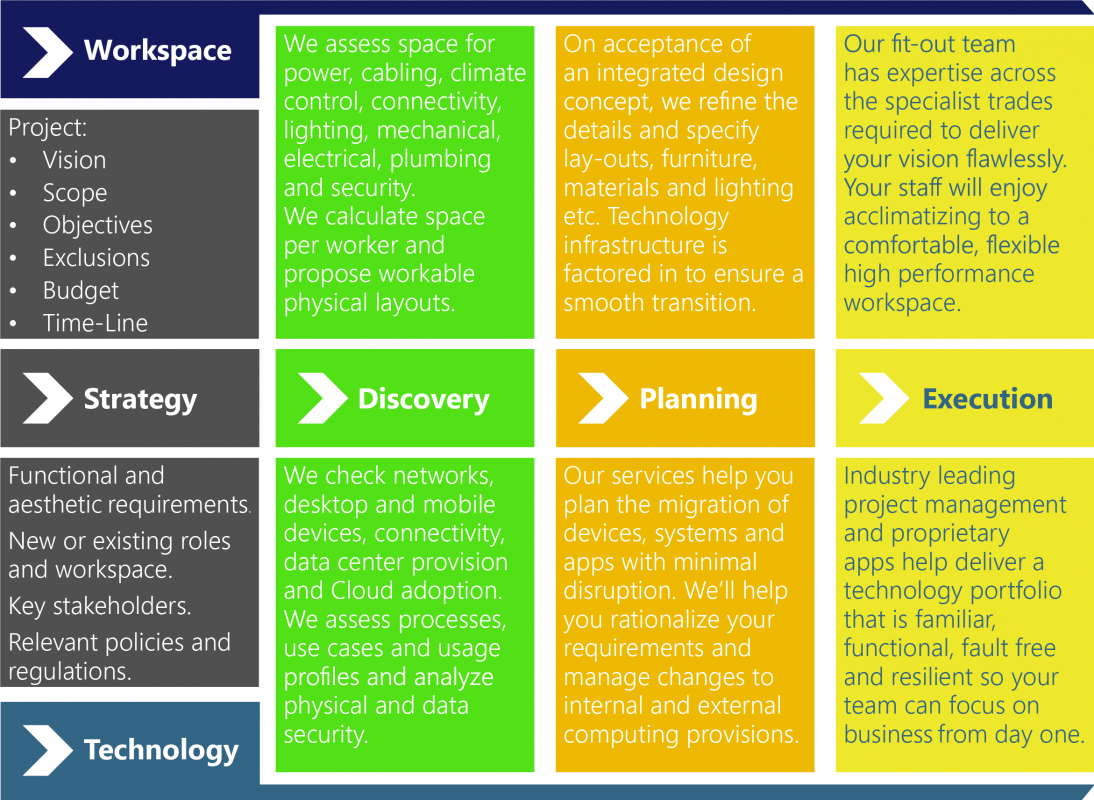
Workspace and technology design integrated for stunning results. JP Reis from jpreis.com What is a Business?
Business is a sort of company that is set up so that it can serve customers. The main goal of businesses is profit, however, there are numerous other targets that can be achieved through the business. In the end, however, the principal goal of a firm is to satisfy a client's demands and desires. According to Peter Drucker argues, this is the sole true way to define business. In the absence of customers, a business cannot survive.
Internal functions are the functions done within the business
Internal activities are carried out within the organization to meet a specified set of goals. These can include policies and procedures. To be effective, policies and procedures should be well-thought out, implemented and communicated across the organization. The leaders of an organization should communicate about the importance of controlling risks and mistakes is a serious matter and that internal control should be a top priority. Furthermore, all employees must be aware of their roles in internal control , and are equipped to relay important information upstream.
Sales and marketing activities are examples of internal functions. Sales managers are responsible of ensuring that the products and services get to their clients on time. They must also ensure they reach all areas for which they are specifically targeted. Apart from these core routines, internal operations include support functions that allow the internal and outside business functions to run efficiently. Managers of these functions provide details to management so that they can make strategic choices.
Internal controls can prevent mistakes they also protect information and help to prevent fraud. Without internal controls, financial reports are inadequate and the operational efficiency gets impaired. Additionally, they can damage the reputation of the company. Therefore, it is essential creating internal controls to ensure the integrity and accuracy of the organization's financial reports and prevent fraud and theft.
Profit is the measure of success of a business
Profit is defined in both relative and absolute terms. Absolutely, profit is the amount of profit that you earn over a time. When viewed in terms of relative value, profit is the amount of income earned in terms of a percentage of revenue. Profit is an important indicator for business, as it is a motivator to make investments and take risk.
Profitability is the main goal of any business. Without it, a company is doomed to fail. Profitability is determined by two components which are expenses and income. Income is money made from the sale of a product or service. It doesn't include the cost of obtaining capital. The expense is the cost of managing the company.
Profit is a financial gain that a company makes after deducting expenses. The greater the profit margin and the higher the profit margin, the better the company's finances. Another important factor is the level of customer satisfaction. A high level of happiness can help a company enhance its services and products. Mailer newsletters and polls and customer surveys are common ways of gathering this information.
Profit does not define success. It refers to different things for diverse businesses. For example, a high street shop might be successful when it is in the position of breaking even, or when it generates profits of up to PS2,000 per week. Breaking even is an accomplishment for a company in its first yearof operation, but it is not necessarily an indicator of an overall success.
Trade cycles make business an uncertain business
There are four phases in the business trade cycle. Each phase varies in time and can impact the economy, such as jobs, inflation rates and the consumption of consumers. These cycles are watched by central banks, and are among the main factors that affect their monetary policy as well as short-term interest rates. The cycles are defined by a peak, contraction, and the trough. Being aware of the phases of the business trade cycle can help investors in understanding the economy's conditions.
The initial step of business cycle is called the expansion phase. The next phase is the contraction phase. In the phase of contraction, the economy has reached its maximum growth rate and ceases to expand. The result is that unemployment rates increase, and incomes to decline. The economy can also be in a bear market when investors sell their shares. This stage of contraction could be initiated by an abrupt increase in interest rates or financial instability, or the escalating inflation.
Small-sized companies against. mid-sized businesses
There are a variety of ways to categorize companies. One way is through the number of employees. A small company is typically defined as having less that 50 employees. A mid-sized firm has between 50 and more than $1 billion in revenue. Larger companies are typically above $1 billion in revenue. While large corporations can dominate certain industries, the majority jobs and products are completed by small and mid-sized companies.
The distinctness between small and medium-sized firms is vital because every business category employs different amounts of people. While small-sized businesses usually employ less than a hundred people, mid-sized businesses could employ tens of thousands. Smaller and mid-sized businesses could also benefit from different organizational systems and software.
In addition to these variations to these variations, the size of the firm can also affect the type of workplace it provides. A smaller company may be able to offer more flexibility, say in the process of streamlining communication and decision-making processes. A smaller business may also be able to make changes quicker than a larger corporation. A small-sized business might also offer flexible work schedules such as work from home and other bonuses.
One advantage of working with small-sized businesses is the fact that they are more imaginative and focused in their sales strategies. Also, small businesses are more likely to try and test solutions to ensure they're efficient. They also can make decisions quickly and more efficiently when compared with large corporations. Furthermore, small enterprises will often refer other small companies to their solution when they're satisfied with it.
Subchapter S corporations
Subchapter S corporations are closely linked to the other types of corporations. The primary procedures for incorporating any business are the exact same however the most significant difference is the form of ownership. The majority of people are permitted to own shares in S corporation. There are also some restrictions on who can become an investor.
If you're thinking to start your own business, you must consult professionals. Legal and tax professionals are able to provide expert advice. You can also join and participate in CorpNet Partner Program, a network of companies providing business formation and compliance services. Through referring clients, you can earn extra revenue.
In the case of an S corporation, you will save tax. Subchapter S corporations aren't taxed at the corporate level. This means that the earnings you make aren't taxed twice. Additionally, S corporations don't have to pay for payroll taxes, or Social Security or Medicare taxes. This means they're significantly less tax efficient than other kinds of business entities.
However, it does have some drawbacks, including the fact that the shareholders must pay income tax on any money they distribute to them. In addition, it creates tension for the business to distribute cash more often which could negatively impact capital formation. Thus, it may not be the best choice for businesses that need the funds for a large investment.
An investment in facilities helps a business increase productivity. An investment in facilities helps a business increase productivity by a. Company a will hire new.
Experienced Facilities Managers Have Learned The Value Of Increasing Workplace Productivity.
Capital investment can affect a national economy in multiple ways. To reduce instances of the. So for this question, i want to know how gangs can live up with activity leads to gains in gdp per capital.
Highly Productive Companies Generate More Revenue.
Bringing in more people to make a product. An investment in facilities helps a business increase productivity by: It reduces the price of goods to be sold and.
Improving The Location Where The Business Operates.
An investment in facilities helps a business increase productivity by: Expanding the business into new markets c. An investment in facilities helps a business increase productivity by a.
It Ensures Effective Utilisation Of Available Resources Thereby Increasing Total Volume Of Production And Decreasing Cost Of Production.
Facilities management today is a key function in managing facility resources, support services and working environment, to achieve the core business objectives of. A better location for operations improves. Company a will hire new.
The Purchase Of Equipment Provides The Same Boost To The Production Of Manufacturer Co., And The Sales Rep Who Sells The Equipment.
Question an investment in facilities helps a business increase productivity… image transcription text9. An investment in facilities helps a business increase productivity by: The 3/30/300 formula states that the cost of a.
Share :
Post a Comment
for "An Investment In Facilities Helps A Business Increase Productivity By"
Post a Comment for "An Investment In Facilities Helps A Business Increase Productivity By"